

We can assure you, that we only place your backlinks in super high-quality PBN Networks that are both safe and reliable. With a limited amount of selling in each site.

PBNs can be quite tricky, and having been burned in the past I was very apprehensive. But their service happens to be quite safe as my website has not seen any penalties. On the contrary, we’ve seen an increase in rankings.

I must say, quite an affordable service for the quality delivered. The links are well placed and the websites look genuine for the most part. I’ll be back again.
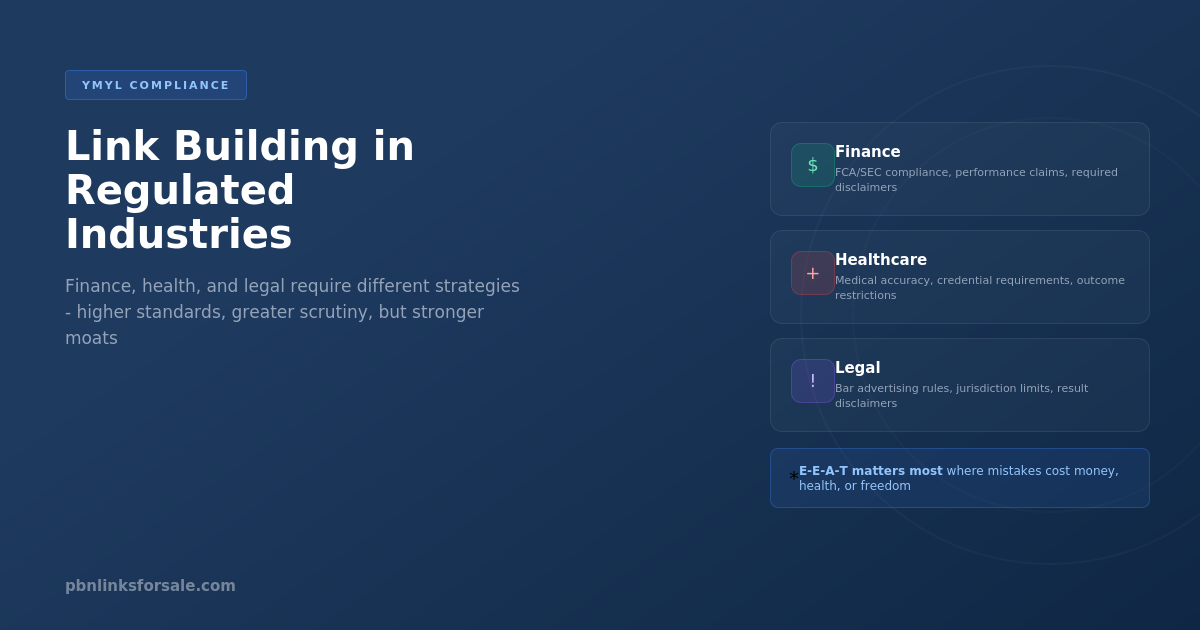
Link building gets complicated when regulators are watching. Finance, healthcare, and legal services operate under scrutiny that most industries never face. The content you publish, the claims you make, and the authority signals you build all carry weight beyond SEO—they have compliance implications.
Google knows this too. YMYL—Your Money or Your Life—categories receive heightened algorithmic scrutiny. The search engine applies stricter quality standards to content that could affect someone's financial security, physical health, or legal standing. Shortcuts that work in other niches trigger penalties here.
This piece covers what's different about link building in regulated spaces, the specific challenges each major vertical presents, and strategies that build authority without triggering compliance issues or algorithmic suppression. If you're building links for financial services, healthcare, legal practices, or adjacent industries, these principles apply.
The differences go beyond Google's YMYL classification. Regulated industries face constraints that fundamentally shape link building strategy.
Financial services can't make performance promises. Healthcare providers can't guarantee outcomes. Lawyers face advertising restrictions that vary by jurisdiction. The content you create—including guest posts and contributed articles—must navigate these boundaries.
This affects link building directly. Guest post content requires compliance review. Claims need documentation. Disclaimers must appear appropriately. The casual approach that works for lifestyle content creates liability here.
Even link placement involves compliance considerations. Linking from sites that make problematic claims can create association risks. The sites you appear on reflect on your brand in ways regulators and professional bodies notice.
Google's E-E-A-T framework—Experience, Expertise, Authoritativeness, Trustworthiness—applies everywhere but matters most in YMYL spaces. The algorithm actively looks for signals that content creators have genuine credentials and that sites deserve trust on sensitive topics.
Links contribute to E-E-A-T signals. Links from recognised industry authorities signal that your site belongs in professional conversations. Links from questionable sources undermine the trust signals you need. The quality bar isn't just about Domain Authority—it's about demonstrated expertise in your specific field.
This creates a narrower acceptable link universe. Sites that might be fine for a lifestyle brand become problematic for a wealth management firm. The link sources that build authority in regulated spaces are more limited and often more competitive.
Google's quality raters explicitly evaluate YMYL content more strictly. Algorithm updates disproportionately affect these categories. What looks like normal link building in other spaces may trigger suppression in regulated verticals.
The August 2018 "Medic Update" devastated health sites with thin authority signals. Subsequent updates continued targeting YMYL categories. Each update refines Google's ability to distinguish genuine expertise from content marketing dressed as authority.
This means playing the long game. Tactics that produce short-term gains but lack genuine authority backing eventually backfire. Sustainable link building in regulated spaces requires building real credibility, not just link counts.
Financial services face some of the strictest link building constraints—and some of the most valuable keywords. Getting this right matters significantly.
Financial promotions face regulatory oversight in most jurisdictions. In the UK, the FCA monitors financial advertising. In the US, SEC, FINRA, and state regulators impose requirements. Every jurisdiction has rules about what can be said, what must be disclaimed, and how financial products can be presented.
Guest content for link building counts as financial promotion in many contexts. Articles discussing investment strategies, credit products, or financial planning may trigger compliance requirements. This doesn't make link building impossible—it makes it more careful.
Work with compliance teams early. Build approval workflows for outbound content. Understand which topics require disclaimers and which are too sensitive for external placement. The upfront process saves problems later.
Finance link building benefits from recognisable authority sources. Financial publications—Forbes, Bloomberg, Financial Times, industry-specific outlets—carry weight both algorithmically and for brand positioning. Coverage in these outlets signals legitimate market participation.
Professional association links matter more in finance than many industries. CFA Institute, industry trade bodies, regional financial planning associations—these represent peer recognition that algorithms and humans both value.
Educational institution relationships provide powerful authority signals. Contributing to university finance programmes, sponsoring academic research, or earning links from business school resources builds credibility that generic link building can't replicate. Finance-specific link networks can complement these premium placements, providing the volume foundation while authority sources provide credibility peaks.
Financial content that earns links tends toward education rather than promotion. Market analysis, economic explainers, retirement planning guides, tax strategy overviews—these formats attract links because they provide genuine value without crossing into regulated territory.
Data and research perform particularly well. Original analysis of market trends, surveys of financial behaviours, or benchmarking studies create citation opportunities. Journalists and analysts link to primary data sources—being that source builds links and authority simultaneously.
Expert positioning drives link opportunities. Establishing individual advisors or analysts as quotable experts generates media mentions and links. Building these expert profiles takes time but creates compounding returns as journalists repeatedly return to reliable sources.
Healthcare link building faces perhaps the strictest Google scrutiny. Health misinformation concerns have driven repeated algorithm updates targeting this space.
Health content requires accuracy that goes beyond typical fact-checking. Claims should be supported by peer-reviewed research. Treatments should reflect current medical consensus. Conditions should be described according to established medical understanding.
Google explicitly evaluates whether health content is created by or reviewed by qualified medical professionals. Author credentials matter. Medical review processes matter. Sites without clear medical expertise signals struggle to rank regardless of link profile.
This affects link building because the content earning links must meet these standards. Guest posts about health topics need medical accuracy. Link-worthy resources need professional oversight. The content investment required for effective health link building exceeds most other verticals.
Medical authority flows from clinical credentials and institutional affiliations. Links from medical schools, teaching hospitals, professional medical associations, and peer-reviewed journals carry exceptional weight—both for rankings and for establishing legitimate expertise.
Patient advocacy organisations represent another valuable link source. Disease-specific foundations, support organisations, and health advocacy groups link to genuinely helpful resources. These links signal community recognition of useful content.
Government health agencies provide ultimate authority signals. Links from NHS resources, CDC publications, or health department websites indicate official recognition. These are difficult to earn but transformative for authority positioning.
Healthcare providers can pursue several link building paths that work within constraints:
Community health education creates natural link opportunities. Providing genuinely useful health information to local communities earns coverage from local media, citations from community organisations, and links from schools and employers sharing resources with their constituencies.
Provider credentials should be prominently positioned. When physicians contribute content elsewhere, their qualifications should be clear. Board certifications, hospital affiliations, and speciality training all signal the expertise Google looks for.
Research participation builds links naturally. Providers involved in clinical trials, academic research, or published studies earn links through the research ecosystem—university partners, journal citations, and media coverage of findings.
Legal link building combines regulatory constraints with intensely local competition. Most legal services compete geographically, adding location dimensions to YMYL considerations.
Bar associations regulate attorney advertising with rules that vary significantly by jurisdiction. Some prohibit comparative claims. Others require specific disclaimers. Many restrict how past results can be presented.
Guest content and external placements count as advertising in most jurisdictions. Articles written by attorneys, even for link building purposes, must comply with applicable rules. Firms operating across multiple jurisdictions may need to navigate different requirements for different content.
These rules don't prevent link building—they shape it. Educational content about legal concepts, explanations of court procedures, and guides to legal rights typically face fewer restrictions than promotional content about specific firm capabilities.
Legal directories remain important for authority signals. Martindale-Hubbell, Super Lawyers, Best Lawyers, and practice-specific directories provide recognised credentialing. These listings typically include links while signalling professional standing.
Bar association involvement generates link opportunities. Committee participation, CLE presentations, and bar publication contributions all create natural links from highly authoritative legal sources.
Legal scholarship—even for practitioners—builds authority. Publishing in law reviews, contributing to legal treatises, or writing for practitioner-focused publications earns links while demonstrating the expertise Google's algorithms seek.
Most legal services compete locally, making local link building essential. Chamber of commerce memberships, local business associations, and community organisation involvement build locally-relevant links.
Pro bono work and community legal education create natural link opportunities. Hosting know-your-rights workshops, providing legal guidance to community groups, or supporting access-to-justice initiatives earns coverage from local media and links from community organisations.
Local news relationships matter particularly for legal practices. Attorneys who become reliable sources for legal commentary in local media build both links and referral relationships. Being the lawyer local reporters call for quotes generates ongoing link opportunities.
Several other industries face similar dynamics without quite reaching finance, health, or legal intensity.
Insurance combines financial services regulation with specific industry requirements. Content about coverage, claims, and policy features requires accuracy and appropriate disclaimers.
Insurance link building benefits from educational content about risk management, coverage decisions, and claims processes. Consumer-focused guides that help people understand insurance without promoting specific products earn links while staying compliant.
Real estate faces licensing requirements and fair housing regulations that affect content and advertising. Market analysis, neighbourhood guides, and home buying education provide link-worthy content within these constraints.
Local authority matters intensely for real estate. Links from local news, community sites, and neighbourhood resources signal the local expertise buyers seek. National link building matters less than hyper-local authority.
Gambling operates under extensive regulatory frameworks that vary dramatically by jurisdiction. Link building must account for licensing requirements, advertising restrictions, and geographic limitations. Gambling-specific link building requires understanding these constraints while building authority in a highly competitive space.
The gambling industry illustrates how regulated doesn't mean impossible. Operators build substantial organic presence through responsible gambling content, game guides, and entertainment-focused approaches that stay within regulatory boundaries.
Certain approaches apply regardless of specific vertical:
In regulated spaces, genuine authority beats manufactured authority. Links from sources that actually recognise expertise matter more than links from sites that accept anything. Quality dramatically outweighs quantity.
This doesn't mean only pursuing difficult-to-earn links. A comprehensive link building approach combines foundational links that provide volume with premium placements that provide authority peaks. The mix matters more than either component alone.
Individual expert profiles often matter more than corporate brand authority in regulated spaces. People trust doctors, lawyers, and financial advisors—not medical corporations, law firms, or banks.
Building expert profiles creates compounding link opportunities. Media relationships grow as experts become known quantities. Speaking opportunities multiply. Contributed content becomes easier to place as bylines carry recognition.
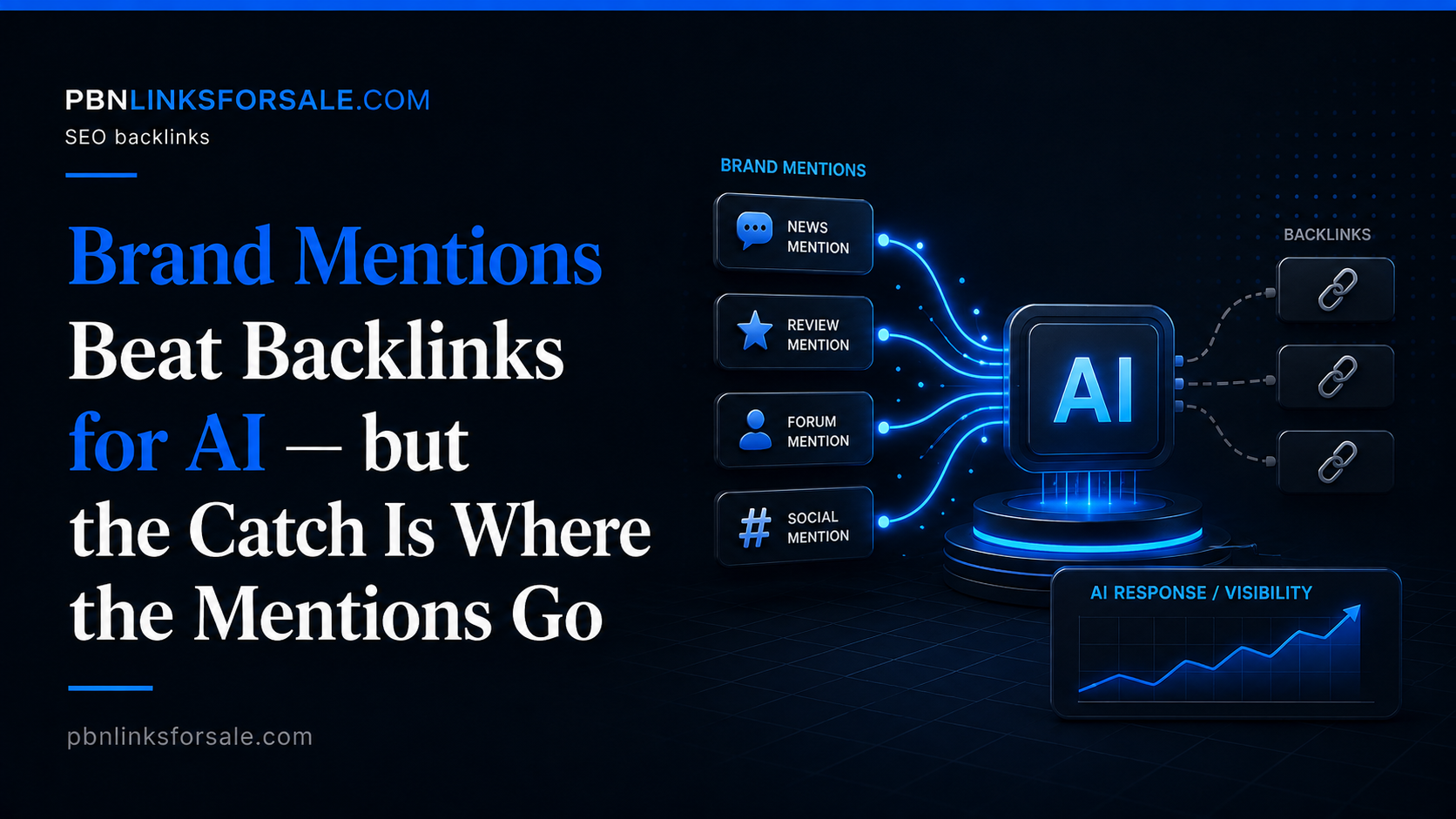
This expert positioning also supports AI visibility. As AI systems increasingly answer questions about professional services, being a recognised, frequently-mentioned expert in your field influences whether you're recommended. Press coverage and thought leadership placements feed both traditional link building and AI training data.
Regulated industries have natural opportunities to create link-worthy resources that don't require promotional claims. Calculators, educational guides, template documents, and explainer content all attract links while staying compliant.
A mortgage calculator earns links without promising anything. A guide to understanding medical bills helps patients without making treatment claims. An explainer on court procedures assists the public without advertising specific services.
These resources compound over time. Once created, they continue earning links and building authority without ongoing compliance review for each new link opportunity.
Rather than treating compliance as an obstacle, build it into link building workflows. Create approval processes for external content. Develop templates that include required disclaimers. Train link builders on regulatory requirements.
This upfront investment prevents problems and speeds execution. When compliance review is standard process rather than exception handling, link building can proceed efficiently within boundaries.
Document everything. Regulated industries face scrutiny, and demonstrating that marketing activities followed appropriate processes provides protection. Keep records of content approvals, placement decisions, and compliance reviews.
Certain approaches that work elsewhere fail or backfire in regulated spaces:
Avoid aggressive anchor text. "Best personal injury lawyer" anchor text from dozens of sites looks manipulative anywhere—it looks especially suspicious for a category Google scrutinises. Natural anchor profiles matter more in YMYL verticals.
Avoid low-quality volume approaches. Mass directory submissions, article marketing, and other volume-focused tactics trigger algorithmic penalties faster in YMYL categories. The quality threshold is higher.
Avoid association with problematic content. Links from sites promoting miracle cures, guaranteed returns, or questionable legal schemes create negative associations that harm more than the link helps. Vet link sources for alignment with professional standards.
Avoid making claims you can't support. Guest content that promises outcomes, guarantees results, or makes unsupported claims creates liability and undermines trust signals. Stick to educational content that informs without promising.
Avoid shortcuts on author credentials. Fake or exaggerated expert credentials get caught—by algorithms, by competitors, by regulators. Real expertise matters; manufactured expertise backfires.
Bringing this together into actionable approach:
Audit your current position. Assess existing link profile for problematic sources or patterns. Identify authority gaps compared to competitors. Understand what genuine expertise signals you have to work with.
Map compliant content opportunities. Identify topics you can address within regulatory constraints. Develop content concepts that provide genuine value without triggering compliance issues.
Identify authority sources. List the publications, organisations, and institutions that represent genuine authority in your vertical. Develop strategies for earning links from these sources.
Build expert profiles. Identify individuals whose credentials support thought leadership. Develop their visibility through speaking, writing, and media relationships.
Create compliance workflows. Establish processes for content approval, placement vetting, and record keeping. Make compliance standard rather than exceptional.
Combine foundation and authority. Build a diverse link profile that includes both volume-building foundations and authority-building premium placements. Neither alone is sufficient.
Regulated industry link building requires more care, more investment, and more patience than typical verticals. The quality bar is higher. The margin for error is lower. Shortcuts backfire faster and harder.
But the competitive barriers this creates also represent opportunity. Competitors who cut corners eventually pay the price in penalties and lost trust. Those who build genuine authority accumulate advantages that compound over time. The investment required for sustainable success in regulated spaces is higher—but so are the returns for those who make it.






2025 © Copyrights PBN Links For Sale

Stop struggling with SEO. Our expert team will analyze your website and create a custom backlink strategy that delivers real results. Get more traffic, more leads, and more revenue.
Take the first step towards expanding your business online with our Backlinks services. We work with many private individuals and SEO agencies. We can help you take care of all your Backlink needs and rank your websites correctly. Boost your website's rankings today!


Find the perfect solution for your SEO and link building needs
Browse our full range of quality backlinks and SEO services
Shop NowComplete packages for every budget and ranking goal
View PackagesWhite-label solutions for agencies and resellers
Agency PlansProfessional SEO services at competitive prices
Learn More