

We can assure you, that we only place your backlinks in super high-quality PBN Networks that are both safe and reliable. With a limited amount of selling in each site.

PBNs can be quite tricky, and having been burned in the past I was very apprehensive. But their service happens to be quite safe as my website has not seen any penalties. On the contrary, we’ve seen an increase in rankings.

I must say, quite an affordable service for the quality delivered. The links are well placed and the websites look genuine for the most part. I’ll be back again.
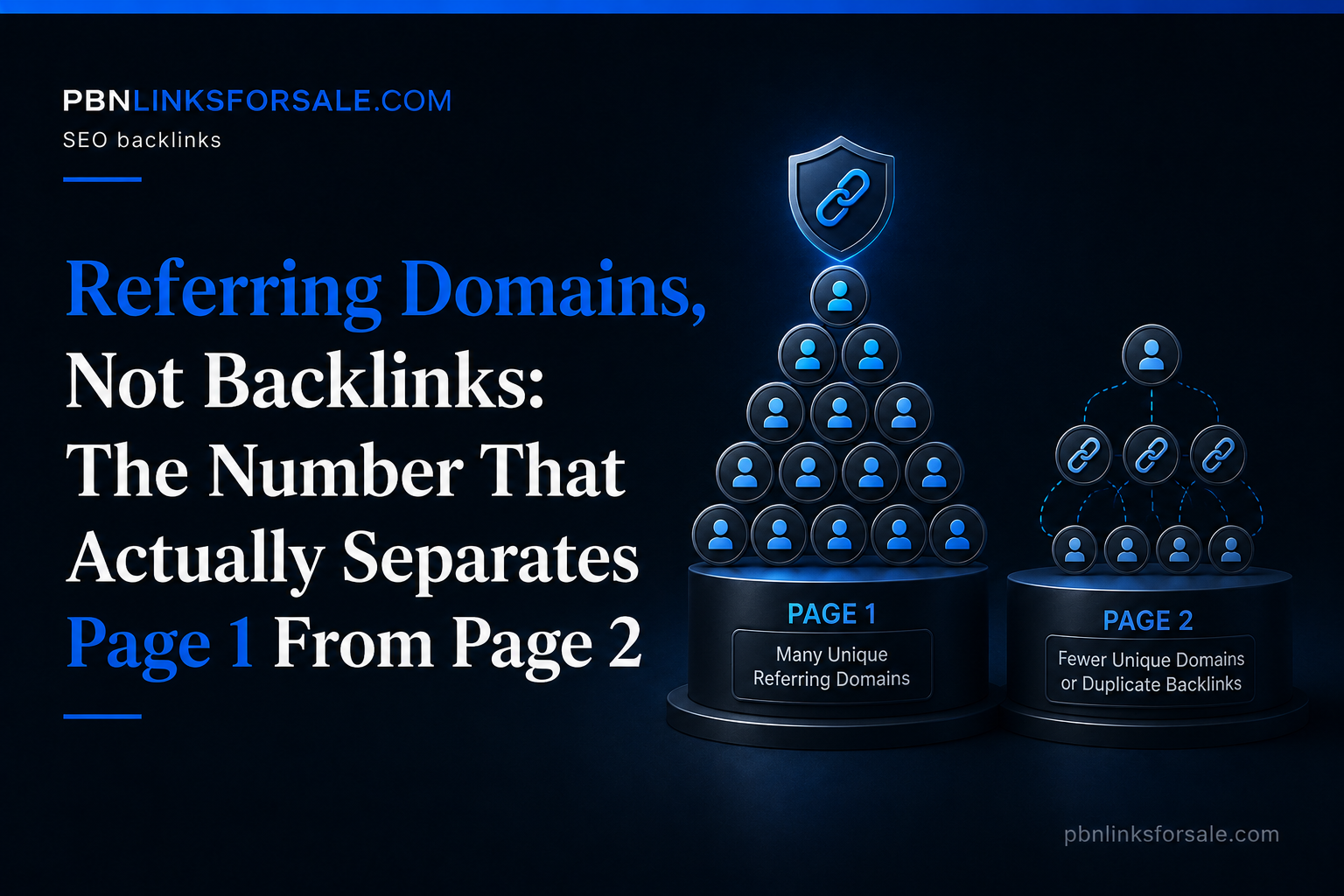
Ask most people buying links how their campaign is going and they’ll tell you a number: how many backlinks they’ve built. Two hundred links. Five hundred links. It feels like the natural scoreboard — more links, more authority, better rankings. But it’s the wrong number, and buying to it is one of the most common ways link budgets get wasted. Google doesn’t count your backlinks the way you do. It cares far more about how many distinct websites link to you — your referring domains — than about the raw total of links. Fifty links from one site is close to one vote counted fifty times. Ten links from ten different sites is ten separate endorsements. The second is worth dramatically more, and the 2026 data makes the gap impossible to ignore.
First, the distinction, because conflating these two is the root of the problem. A backlink is any single link pointing to your site. A referring domain is a unique website that links to you, regardless of how many times it does. If one blog links to you from forty of its pages, that’s forty backlinks but only one referring domain. The two numbers can diverge wildly, and buyers who watch the big number (backlinks) instead of the meaningful one (referring domains) systematically overvalue what they’ve actually got.
Google treats a link as a vote of confidence from one site to another. The key words are ‘from one site.’ The first link from a domain carries that site’s endorsement; the second, third, and fortieth link from the same domain add very little on top, because it’s the same site vouching for you again. There’s no new information in the fortieth vote from a friend you already counted. This is why a hundred links from five sites is a thin profile wearing a fat number, and why the total-links scoreboard flatters weak campaigns.
This isn’t theory — it’s one of the most consistent findings in modern SEO research, and the 2026 audits sharpened it considerably.
Manual audits of top-ranking pages across competitive niches in 2026 kept landing on the same result: the count of unique referring domains predicted ranking position better than total backlink count in every niche examined. In head-to-head comparisons, a site with around forty links from thirty-odd distinct domains consistently outranked a site with two hundred links from a dozen domains. Read that again, because it’s the whole point: fewer total links, but from more sources, won — decisively and repeatedly. The number of distinct voices, not the volume of noise, is what moved position.
This tracks with the large-scale research going back years. The classic analyses found that the number of referring domains correlated with rankings more reliably than almost any other link metric, and that the top result tends to have not just more links but more distinct domains linking to it than the pages below. The 2026 work didn’t overturn that — it reinforced it with fresh, niche-specific data. Across a decade and multiple methodologies, the durable finding is the same: diversity of sources beats quantity of links.
Why does Google work this way? Because it’s a sensible model of real trust, and understanding the logic tells you how to buy.
Anyone can generate a thousand links from a handful of sites they control. Getting links from a thousand genuinely different sites is far harder and far more like what real popularity looks like. So referring-domain count is a better manipulation-resistant signal: it’s expensive to fake breadth, cheap to fake volume. Google leans on the number that’s harder to game, which is exactly why chasing raw link count — the easy-to-fake number — produces profiles that don’t rank.
Every distinct site that links to you is an independent data point in your favour — a new source vouching for you. The tenth different site telling Google you’re credible adds real signal; the tenth link from a site already in your profile adds almost none. This is also why the raw metric on any single domain matters less than people think, and part of why sorting links by DR is almost entirely wrong: a profile’s strength is about the breadth and quality of distinct endorsing domains, not a headline score on any one of them or the size of the total-links figure.
A site that’s genuinely useful in its niche naturally attracts links from many different corners of that niche — blogs, resources, publications, forums. Breadth of referring domains mimics that organic reality; a tall stack of links from a few places doesn’t. When your profile has many distinct, relevant domains behind it, it looks like what genuine authority actually is, and that’s the shape Google rewards.
Reframe your buying around referring domains and a lot of decisions change for the better:
This is exactly why a spread-out, varied campaign outperforms a concentrated one. multi tier backlink packages that place links across many different domains build referring-domain count the way Google rewards, and blending in guest posts with real traffic adds distinct, trusted sources rather than more links from the same few. The goal is always more relevant voices, not more repetition of the ones you already have.
The scoreboard most link buyers watch — total backlinks — is not the scoreboard Google uses. Google counts distinct referring domains, because the first link from a site is its vote and the fortieth adds almost nothing, and because breadth is far harder to fake than volume. The 2026 audits made it concrete: fewer links from more domains beat more links from fewer domains, in every niche tested, matching a decade of research that says diversity of sources is the strongest link-based predictor of rankings there is. So stop counting links and start counting the websites behind them. Build a diverse backlink profile spread across many relevant, distinct domains rather than stacked on a few, and buy PBN backlinks that grow your referring-domain count — because that’s the number actually separating page one from page two.





2025 © Copyrights PBN Links For Sale

Stop struggling with SEO. Our expert team will analyze your website and create a custom backlink strategy that delivers real results. Get more traffic, more leads, and more revenue.
Take the first step towards expanding your business online with our Backlinks services. We work with many private individuals and SEO agencies. We can help you take care of all your Backlink needs and rank your websites correctly. Boost your website's rankings today!


Find the perfect solution for your SEO and link building needs
Browse our full range of quality backlinks and SEO services
Shop NowComplete packages for every budget and ranking goal
View PackagesWhite-label solutions for agencies and resellers
Agency PlansProfessional SEO services at competitive prices
Learn More