

We can assure you, that we only place your backlinks in super high-quality PBN Networks that are both safe and reliable. With a limited amount of selling in each site.

PBNs can be quite tricky, and having been burned in the past I was very apprehensive. But their service happens to be quite safe as my website has not seen any penalties. On the contrary, we’ve seen an increase in rankings.

I must say, quite an affordable service for the quality delivered. The links are well placed and the websites look genuine for the most part. I’ll be back again.
You spend money building external backlinks. You invest hours creating content. But you're probably neglecting the free authority sitting right on your own site—internal links. The links between your own pages.
Internal linking is the most underutilised SEO tactic available. It costs nothing. It's entirely within your control. And it can dramatically improve how both users and search engines navigate your site. Yet most sites treat it as an afterthought—if they think about it at all.
This guide covers how internal linking actually works for SEO, why most sites get it wrong, and how to implement a strategic approach that amplifies the value of every external link you build.
Internal links influence SEO through several distinct mechanisms.
When external sites link to your domain, they pass authority—what SEOs traditionally called "link juice" or "PageRank." That authority doesn't just sit on the page receiving the external link. It flows through your site via internal links.
Every internal link is a vote. When Page A links to Page B, some of A's authority transfers to B. The more internal links pointing to a page, and the more authoritative those linking pages are, the more authority the destination page accumulates.
This means internal linking determines how external authority gets distributed across your site. A page with many quality external links but poor internal linking wastes much of that authority. Conversely, strategic internal links can boost pages that receive few external links directly.
Google's crawlers follow links to discover pages. The more internal links pointing to a page, the more frequently it gets crawled. Pages with few or no internal links may be crawled rarely—or not at all.
Crawl priority matters for indexing speed. When you publish new content or update existing pages, internal links from well-crawled pages help Google discover changes faster. Orphan pages—those with no internal links—may take weeks or months to get indexed.
For large sites, crawl budget becomes a factor. Google allocates limited crawling resources to each domain. Internal linking helps direct those resources toward your most important pages.
Internal links provide contextual signals. The anchor text of internal links tells Google what the destination page is about. The content surrounding the link provides additional context. Links from topically related pages signal that the destination belongs to that topic cluster.
This contextual information helps Google understand your content and match it to relevant searches. A page about "email marketing automation" benefits from internal links with relevant anchors from related pages about email marketing, marketing automation, and related topics.
Your internal linking pattern reveals site structure to Google. Pages linked from the homepage appear more important than pages buried five clicks deep. Pages heavily interlinked appear more central to your site than pages with few connections.
This structure influences ranking. Pages that your internal linking treats as important tend to rank better. Pages your structure treats as peripheral rank worse. Intentionally or not, you're telling Google which pages matter most.
Most sites make predictable errors that undermine internal linking effectiveness.
Pages with no internal links pointing to them are orphans. They're technically on your site but disconnected from its structure. Google may struggle to find them, and when found, they lack authority signals from other pages.
Orphans often result from poor planning: pages created without considering how they connect to existing content. Product pages that never get linked from category pages. Blog posts that aren't referenced anywhere else. Landing pages accessible only through paid ads.
Every page that should rank needs internal links from somewhere relevant. No exceptions.
Many sites rely entirely on navigation menus for internal linking. The header links to main categories. The footer links to legal pages. And that's it.
Navigation links matter, but they're limited. They're the same on every page, diluting their signal value. They use generic anchor text. They can't provide contextual relevance. A site that only internal links through navigation misses most of internal linking's potential.
"Click here." "Learn more." "Read this article." These anchors tell Google nothing about the destination page. They waste an opportunity to provide keyword-relevant signals.
Internal link anchor text should be descriptive. Not stuffed with exact-match keywords, but genuinely descriptive of what the destination contains. This helps both users and search engines understand where the link leads and why it's relevant.
Some sites link everything to everything else indiscriminately. Every blog post links to every other blog post. Every product links to every other product. This flatness fails to signal which pages are most important.
Strategic hierarchy matters. Pillar pages should receive more internal links than supporting pages. High-converting pages should receive more authority than low-priority pages. Your internal linking should reflect your business priorities, not uniform distribution.
Sites often focus internal links on new content while forgetting older, deeper pages. Archive content accumulates with no ongoing internal linking attention. These pages gradually become disconnected from your site's current structure.
Deep pages may still attract search traffic and earn external links. But without internal links connecting them to current content, their authority doesn't flow to the rest of your site—and they miss opportunities for reciprocal authority from newer pages.
Move beyond haphazard internal linking to intentional strategy.
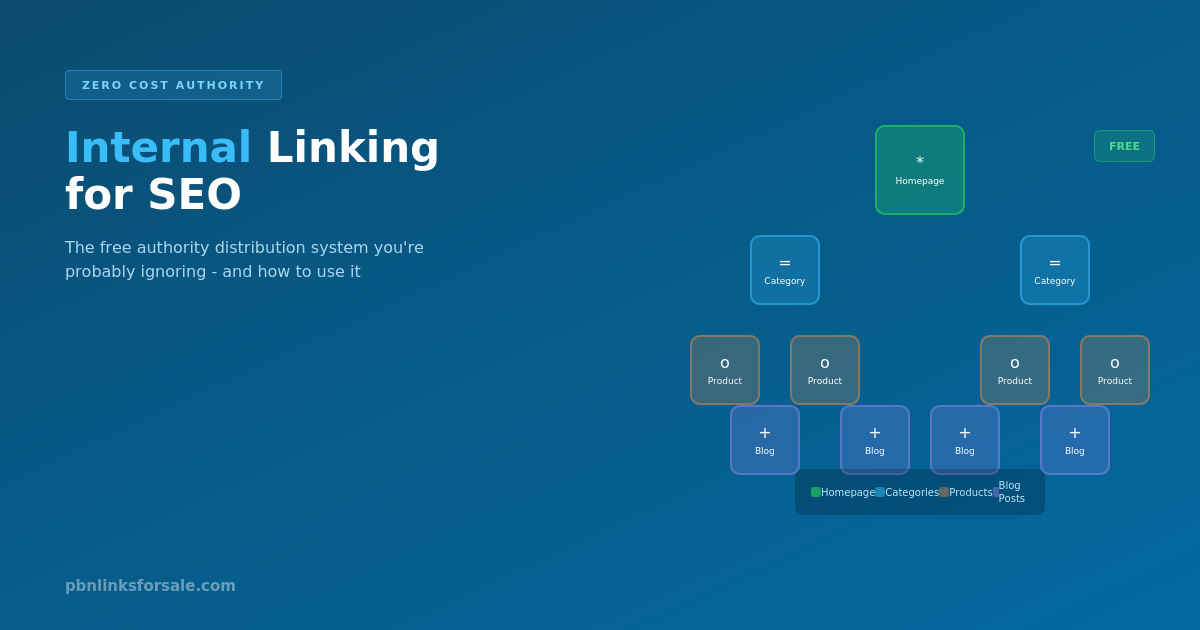
Organise content into topic clusters. Each cluster has a hub page—a comprehensive pillar that covers a topic broadly. Surrounding the hub are spoke pages—more focused content addressing specific aspects of that topic.
Internal linking connects the structure: the hub links to all spokes, and all spokes link back to the hub. Spokes may also link to each other where relevant. This creates concentrated topical authority that benefits both hub and spoke pages.
For example, a site about digital marketing might have a hub page on "email marketing" with spokes covering "email deliverability," "email list building," "email automation," and "email copywriting." All connected through intentional internal links.
Not all pages deserve equal internal linking attention. Identify your priority pages—those that drive revenue, convert visitors, or target your most valuable keywords. Direct disproportionate internal linking toward these priorities.
This might mean: linking to conversion pages from every relevant blog post, ensuring product pages receive links from all related category and guide content, or concentrating authority on competitive keywords while accepting less focus on long-tail terms.
The same principle that makes link building investment decisions matter applies internally: concentrate resources where they produce the most value.
Links within content bodies carry more weight than navigation or sidebar links. They appear in unique contexts on each page, with surrounding text providing relevance signals. They look more like editorial endorsements than structural necessities.
Build the habit of adding contextual internal links as you create content. Every new article should link to relevant existing content. Every update to existing content should consider new internal link opportunities.
Traditional content silos keep topics separate—pages about Topic A only link to other Topic A pages. But real topics overlap. Overly rigid silos miss legitimate connection opportunities.
Allow cross-silo links where genuinely relevant. A page about email marketing can legitimately link to a page about landing page optimisation. The connection serves users and provides relevant contextual signals. Don't let organisational structure prevent logical connections.
Internal linking determines how much value you extract from external backlinks.
External links often point to specific pages—a popular blog post, a linkable resource, a homepage. These entry points receive direct authority. Internal linking distributes that authority throughout your site.
Map your external link profile. Which pages receive the most external links? Ensure those pages internally link to your priority pages. The authority flowing in should flow toward your most important destinations.
This is why content that earns links—guides, research, tools—needs strategic internal linking even if those pages themselves don't target commercial keywords. They're authority entry points. We've discussed how links compound over time—internal linking amplifies that compounding by spreading authority across your site.
External links typically point to informational content rather than commercial pages. Blog posts earn links; product pages rarely do. Internal linking bridges this gap by connecting link-earning content to revenue-generating pages.
A comprehensive guide that attracts dozens of external links should internally link to related products or services. The guide captures authority; internal links transfer that authority to pages that convert.
New content starts with no authority. External link building takes time. Internal links provide immediate support by connecting new pages to established content that already has authority.
When publishing new content, proactively update existing pages to link to it. The new content inherits some authority immediately rather than starting from zero. This accelerates ranking potential while external links accumulate.
Put strategy into practice with systematic approaches.
Audit existing content for internal linking opportunities. For each page, ask: What other pages on this site are relevant? Where could contextual links fit naturally? Which priority pages should receive links from here?
Tools like Screaming Frog or Sitebulb can crawl your site and identify pages with few internal links, orphan pages, and internal linking distribution patterns. Use this data to identify gaps requiring attention.
Build internal linking into content creation processes. Before publishing any new page, require identification of: at least three existing pages to link to, at least three existing pages that should link to the new content.
This workflow ensures new content integrates with your existing structure rather than floating disconnected. The discipline prevents accumulating orphan content over time.
Internal linking isn't one-time setup—it requires ongoing maintenance. New content creates new linking opportunities for old pages. Updated priorities should shift internal link patterns. Broken internal links need fixing.
Schedule quarterly reviews. Re-audit internal link patterns. Identify pages that have become under-linked as the site grew. Update internal links to reflect current priorities. This maintenance captures value that accumulates over time.
Internal anchor text is less risky than external anchor text—you control it completely and Google expects you to describe your own content. Use this freedom for descriptive, keyword-relevant anchors.
Vary your internal anchors naturally. The same page can receive internal links with different anchor text from different pages. This variation looks more natural and captures more relevant keyword signals than identical anchors everywhere.
There's no magic number. Focus on relevance and user value rather than hitting quantity targets. A 3,000-word comprehensive guide might reasonably have 15-20 internal links. A short product page might have 3-5.
More internal links isn't automatically better. Each link should serve a purpose. Excessive linking dilutes the value of each link and can create overwhelming user experiences. Link where genuinely helpful, not just for SEO metrics.
No. External links from other domains carry more weight because they represent independent endorsements. Internal links are within your control and therefore carry less trust signal.
But internal links still matter significantly. They're how you distribute whatever authority external links bring. And for crawling, indexing, and contextual signals, internal links are essential.
Almost never. Nofollowing internal links was once a PageRank sculpting technique, but Google has long since indicated this doesn't work as intended. Nofollow internal links just waste linking opportunities.
The exception might be links to login pages, account pages, or other content you genuinely don't want Google to prioritise. But for most internal links, let them pass value naturally.
Yes, but they carry less weight than contextual in-content links. Google recognises that site-wide navigation links don't represent unique editorial decisions on each page. They still help with crawling and provide some value, but they're not equivalent to contextual links.
Internal and external linking work together. External links bring authority to your domain. Internal links distribute it. Neither alone produces optimal results. The sites that rank best typically excel at both—building external authority through our range of link building options while distributing that authority effectively through internal links.
Think of external links as fuel and internal links as the engine. You need fuel to power movement, but without an engine to direct that power, the fuel accomplishes nothing. A site with strong external links but poor internal linking wastes much of its authority. A site with excellent internal linking but few external links has nothing to distribute.
The combination creates multiplicative effects. External links increase total authority. Internal links ensure that authority reaches pages that need it. Together, they produce ranking improvements greater than either alone.
If you've neglected internal linking, here's how to begin:
Audit current state. Crawl your site to identify orphan pages, pages with few internal links, and current link distribution patterns. Understand where you are before planning where to go.
Identify priority pages. Which pages matter most for your business? Which keywords do you most want to rank for? These pages should receive disproportionate internal linking attention.
Map topic clusters. Organise your content into logical groups. Identify hub pages for each cluster. Plan the linking structure that connects related content.
Fix critical gaps. Address orphan pages and severely under-linked content first. These quick fixes capture neglected value immediately.
Establish ongoing processes. Build internal linking into publishing workflows. Schedule regular maintenance. Make internal linking a continuous practice rather than one-time project.
Internal linking is free. It's within your control. And it amplifies the value of every external link you build. Most sites ignore it, which means doing it well creates competitive advantage. The authority is already on your site—you just need to direct it where it can produce results.






2025 © Copyrights PBN Links For Sale

Stop struggling with SEO. Our expert team will analyze your website and create a custom backlink strategy that delivers real results. Get more traffic, more leads, and more revenue.
Take the first step towards expanding your business online with our Backlinks services. We work with many private individuals and SEO agencies. We can help you take care of all your Backlink needs and rank your websites correctly. Boost your website's rankings today!


Find the perfect solution for your SEO and link building needs
Browse our full range of quality backlinks and SEO services
Shop NowComplete packages for every budget and ranking goal
View PackagesWhite-label solutions for agencies and resellers
Agency PlansProfessional SEO services at competitive prices
Learn More