

We can assure you, that we only place your backlinks in super high-quality PBN Networks that are both safe and reliable. With a limited amount of selling in each site.

PBNs can be quite tricky, and having been burned in the past I was very apprehensive. But their service happens to be quite safe as my website has not seen any penalties. On the contrary, we’ve seen an increase in rankings.

I must say, quite an affordable service for the quality delivered. The links are well placed and the websites look genuine for the most part. I’ll be back again.
The link building playbook that works for e-commerce, local businesses, or content publishers doesn't translate directly to SaaS. The business model is different. The buyer journey is different. The competitive landscape is different. And the pages that need links—and the types of links that move the needle—follow their own logic.
We've worked with SaaS companies ranging from early-stage startups to established players processing millions in ARR. The patterns are consistent: companies that apply generic link building approaches waste budget and see underwhelming results. Companies that understand SaaS-specific dynamics build link profiles that actually drive growth.
This piece covers what makes SaaS link building distinct and how to approach it strategically. Whether you're a SaaS founder handling SEO yourself, a marketing lead building out your organic channel, or an agency serving SaaS clients, these principles will help you allocate link building resources more effectively.
Before diving into tactics, let's establish why SaaS requires its own approach.
E-commerce sites often focus link building on category pages. Local businesses concentrate on their homepage and service pages. Content sites build links to their best articles.
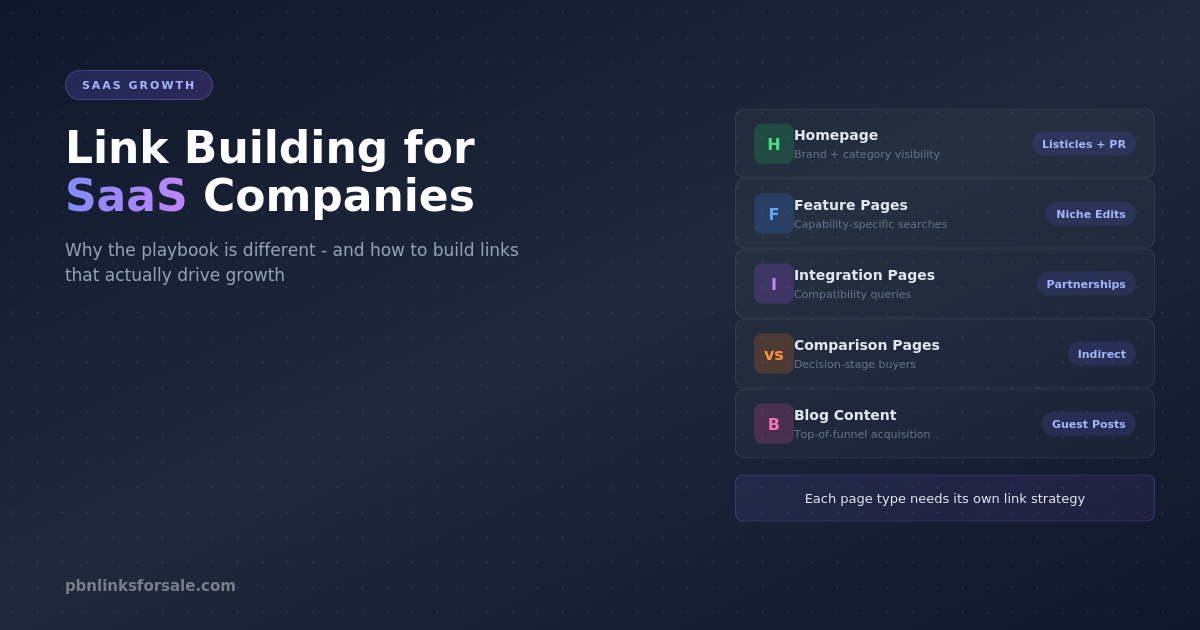
SaaS companies need to rank multiple page types simultaneously: the homepage (for branded and broad queries), feature pages (for specific capability searches), integration pages (for "X + Y integration" queries), comparison pages (for "your product vs competitor" searches), use case pages (for industry or role-specific queries), and the blog (for top-of-funnel content).
Each page type serves different searcher intent and requires different link building approaches. A link strategy focused exclusively on the homepage ignores the feature and integration pages where much of the high-intent traffic lives. Conversely, building links only to blog content may drive traffic that never converts.
SaaS purchases—especially B2B—involve extended evaluation periods. Buyers research, compare, trial, and deliberate before committing. They search multiple times across this journey, using different queries at each stage.
This means SEO success requires visibility across the entire funnel, not just at the purchase moment. You need to rank for educational queries ("what is [category]"), comparison queries ("best [category] software"), and transactional queries ("[your brand] pricing"). Link building needs to support this full-funnel visibility.
The implication: spreading links strategically across page types often outperforms concentrating all links on a single page. Different pages serve different funnel stages, and each needs enough authority to rank for its target queries.
Most SaaS categories are saturated. Established players have years of link building head start. Well-funded competitors spend aggressively on content and digital PR. Breaking into top rankings requires either outspending the competition or outstrategizing them.
Understanding competitor backlink profiles isn't optional in SaaS—it's foundational. You need to know how many links competitors have, what quality those links represent, where they're getting them, and what gaps exist that you can exploit. Link building without competitive intelligence is shooting blind.
G2, Capterra, TrustRadius, Software Advice—these platforms dominate SaaS-related searches. For many category queries, review aggregators occupy the top positions, pushing individual SaaS companies below the fold.
This changes the link building calculation. You're not just competing against other SaaS companies—you're competing against high-authority review platforms with massive link profiles. Winning direct rankings for competitive category terms may be unrealistic. Strategic alternatives become necessary.
Different page types require different approaches. Here's how to think about link building for each major SaaS page category.
Your homepage naturally attracts links—press coverage, company mentions, partnership announcements, and general brand references typically link here. The challenge isn't usually getting homepage links; it's ensuring they're quality links rather than just incidental mentions.
For intentional homepage link building, focus on placements that position your company as a category participant. Premier listicle placements in "best X software" articles send high-intent traffic while building homepage authority. These placements do double duty: they generate direct referral traffic from buyers actively evaluating options, and they build link equity that improves organic rankings.
Brand-building links also matter for the homepage. Coverage in startup publications, industry news sites, and thought leadership platforms builds the brand recognition that supports all other SEO efforts. These links may not drive direct conversions, but they establish credibility that improves click-through rates and conversion rates from organic traffic.
Feature pages target specific capability searches: "project management software with Gantt charts," "CRM with email automation," "accounting software with invoicing." These are high-intent queries from buyers who know what they need.
Building links directly to feature pages is harder than homepage links—the pages are more specific, and natural link opportunities are fewer. But the ranking value is significant because feature pages often face less competition than broader category pages.
Effective approaches include: guest content that discusses specific features with natural contextual links to your feature page; niche edits that add your tool as an example in existing content about the feature category; and resource page placements where your feature page is listed alongside other solutions for specific needs.
Internal linking also matters heavily for feature pages. Strong internal links from your homepage and high-authority blog posts distribute link equity to feature pages that may not attract many external links directly.
Integration pages ("ProductX + Slack integration") capture valuable bottom-funnel traffic. Searchers looking for specific integrations are often late in their evaluation—they've already decided on part of their stack and are checking compatibility.
The best integration page links come from content about the integrated products. If you integrate with Slack, content about Slack workflows, Slack productivity tips, or Slack integrations generally can provide contextually perfect link opportunities. Your integration page represents a natural destination when discussing tools that extend Slack's functionality.
Partnership opportunities add another dimension. If you have formal integration partnerships, pursue co-marketing that includes reciprocal linking. Partner blog posts, joint case studies, and marketplace listings create natural links to integration pages from highly relevant sources.
"ProductX vs ProductY" comparisons attract buyers actively evaluating options. Ranking for these queries captures high-intent traffic at the decision stage. But building links to comparison pages presents challenges—most sites won't link to blatantly self-serving content.
The key is making comparison pages genuinely useful rather than obviously promotional. Fair, thorough comparisons that acknowledge competitor strengths (while highlighting your advantages) earn more credibility and more links than one-sided marketing copy.
Links to comparison pages often come indirectly. Content that ranks for "alternative to [competitor]" queries drives traffic to comparison pages through internal links. Guest posts discussing the category can link to your comparison as a resource. Review site profiles that link to your site can drive visitors who then navigate to comparisons.
SaaS blogs serve top-of-funnel acquisition, building awareness among people who aren't yet ready to buy. Educational content, industry insights, and thought leadership establish expertise and capture email addresses for nurturing.
Blog content is often easier to build links to than commercial pages—other sites link to helpful resources more readily than product pages. But great content still needs active promotion. Creating link-worthy content is step one; actually building links to it requires outreach, guest posting, and strategic placement.
The risk with blog-focused link building is over-indexing on traffic that doesn't convert. Educational content visitors may never need your product. Balance blog link building with commercial page link building—the blog builds domain authority that benefits all pages, but commercial pages need direct links too.
Beyond standard link building, SaaS companies have access to opportunities that don't exist for other business types.
G2, Capterra, and similar platforms provide more than lead generation—they provide authoritative backlinks. Optimised profiles on these platforms build links from DA 90+ domains while generating direct traffic from buyers.
The strategic value compounds. Review site profiles rank for category queries you might never rank for directly. Strong profiles improve your visibility to buyers even when you can't outrank the platforms themselves. The links contribute to overall domain authority that helps all your pages.
Invest in review solicitation to build strong profiles. More reviews improve your visibility within these platforms and strengthen the profiles that link back to you. The effort generates both referral traffic and link value.
If you integrate with major platforms, their marketplaces provide link opportunities. Salesforce AppExchange, HubSpot Marketplace, Slack App Directory, Shopify App Store—each provides visibility and backlinks from authoritative platform domains.
Marketplace listings require investment to optimise. Strong descriptions, compelling screenshots, positive reviews, and responsive support all affect ranking within these marketplaces. But the payoff includes links from trusted sources and direct exposure to users of complementary platforms.
Free tools, calculators, and templates are classic SaaS linkbait. A well-designed ROI calculator, industry benchmark tool, or useful template collection can attract links naturally while demonstrating product value.
The key is creating something genuinely useful that doesn't require your paid product. A project management SaaS might create a free workload calculator. An email marketing platform might offer a deliverability testing tool. A CRM might provide a lead scoring template.
These assets earn links because they provide standalone value. Other sites recommend them as resources. Writers include them in roundups. Users share them. The links build authority for your domain while demonstrating expertise in your category.
SaaS companies sit on data goldmines. Aggregated, anonymised insights from your user base can fuel reports and studies that attract significant links. Industry benchmarks, trend analyses, and state-of-the-market reports position you as an authority while earning citations from journalists, bloggers, and researchers.
Annual reports work particularly well. "The State of [Category] 2026" becomes a reference that others cite throughout the year. The initial launch generates link opportunities, but citations continue as people reference your data in their own content.
Original research also feeds PR efforts. Journalists need data points and trends to write about. If you can provide unique insights others can't get elsewhere, you become a source—and sources get linked.
SaaS companies often have genuine expertise in their category. Founders understand market dynamics. Product leaders know user problems deeply. These experts can generate links through speaking, writing, and media contributions.
Guest articles in industry publications. Podcast appearances. Conference speaking. HARO responses. Each creates opportunities for links back to your site. Guest posting on relevant industry sites puts your expertise in front of relevant audiences while building authoritative backlinks.
This approach compounds over time. As your experts become known in the space, opportunities multiply. Inbound requests for commentary, interviews, and contributions grow. The links keep building without proportionally increasing effort.
SaaS companies operate in the technology space, which creates specific link building opportunities. Technology-focused link networks and placements provide topically relevant links that carry more weight than generic placements.
Tech blogs, developer communities, startup publications, and software-focused sites all represent relevant linking domains for SaaS companies. Links from these sources signal to Google that your site belongs in the technology conversation—exactly where a SaaS company should be.
This relevance advantage matters. A link from a technology publication to a SaaS company carries more contextual authority than the same link to an unrelated business. The topical alignment strengthens the signal.
SaaS buyers increasingly turn to AI assistants for product recommendations. "What's the best project management tool for remote teams?" asked to ChatGPT produces recommendations based on the AI's training data and retrieval.
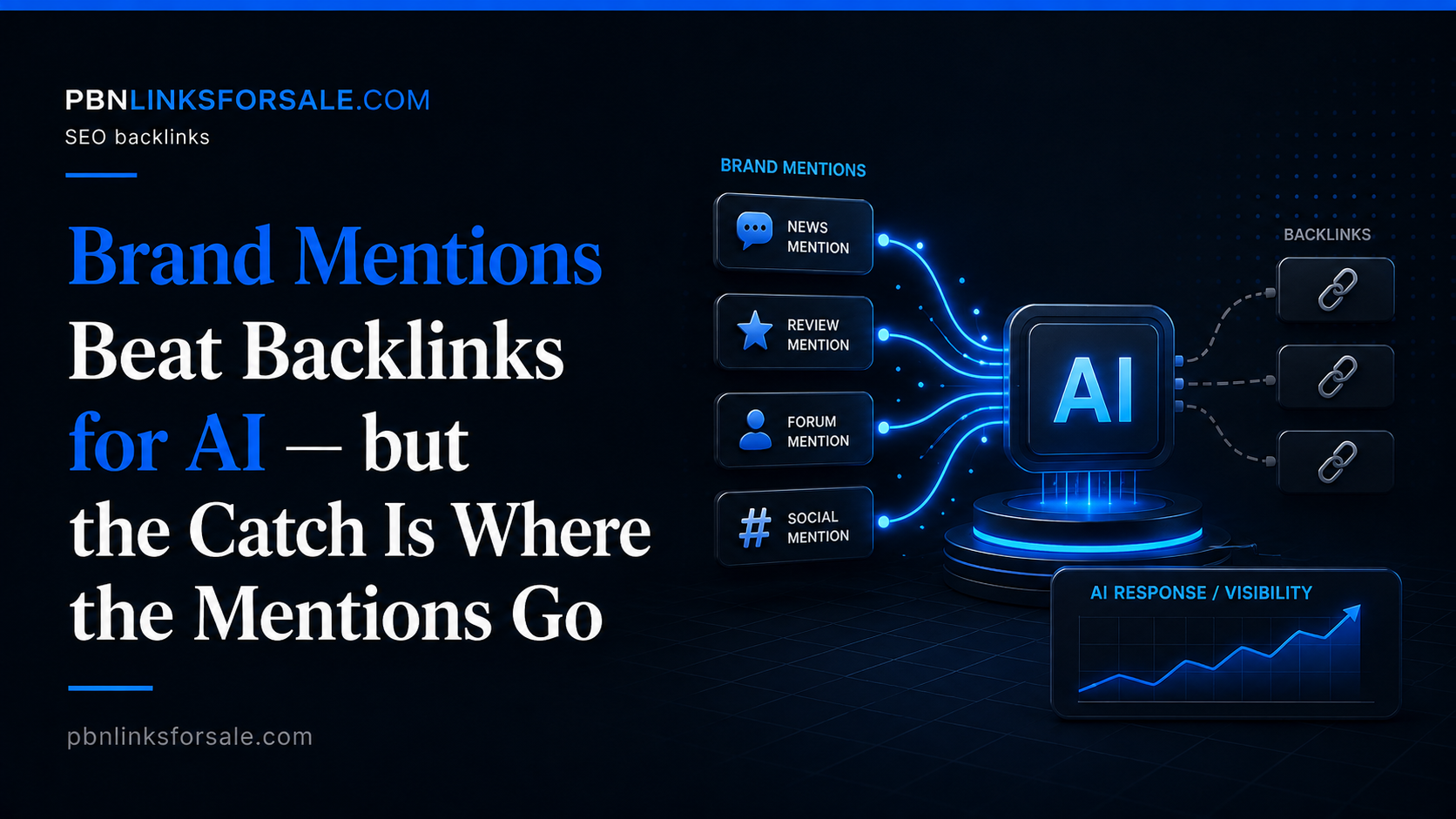
This creates a parallel visibility challenge beyond traditional SEO. Being mentioned, reviewed, and discussed across the web influences whether AI systems recommend you. We've covered this shift extensively in our analysis of AI visibility and brand mentions—for SaaS companies, this visibility is particularly important given how often buyers ask AI for software recommendations.
Link building and AI visibility overlap significantly. The same placements that build links—review site profiles, listicle inclusions, thought leadership content, press coverage—also build the web presence that influences AI recommendations. A comprehensive link building strategy naturally supports AI visibility.
Link building strategy differs somewhat between B2B and B2C SaaS, though many principles apply to both.
B2B SaaS link building often prioritises industry credibility. Links from industry publications, trade media, and professional communities signal legitimacy to business buyers who research extensively before purchasing.
Case studies and customer success content provide natural linking opportunities. Customers who achieved significant results may link to their vendor in their own content. Co-created case studies serve as linkable assets that both parties can promote.
Integration partnerships matter more in B2B, where tech stacks are complex and interoperability is crucial. Links from integration partners—and visibility in their marketplaces—influence buying decisions and build relevant link equity.
B2C SaaS often benefits from broader visibility. Consumer tech media, lifestyle publications, and general interest sites can drive awareness for B2C products in ways that wouldn't work for B2B tools.
Social proof matters intensely. Links from reviews, user-generated content, and community discussions influence B2C buyers who rely on peer opinions. Building presence in consumer forums and review communities pays dividends.
Viral potential exists for B2C products with consumer appeal. A clever tool or particularly useful free resource can earn links through organic sharing in ways that technical B2B tools rarely achieve. The link building strategy can include more linkbait experiments.
How should SaaS companies allocate link building budget across these opportunities? The answer depends on your specific situation, but some principles apply broadly.
Limited budgets should focus on foundation building. Establish basic domain authority with a mix of quality links to the homepage. Build review site profiles. Create one or two genuinely useful linkable assets. The goal is establishing baseline visibility while you refine product and positioning.
Avoid spreading too thin at this stage. Better to build meaningful authority on a few pages than negligible authority across many. Focus link building on your highest-conversion pages—probably the homepage and one or two key feature or use case pages.
With product-market fit established, expand link building across page types. Feature pages need authority to rank for specific capability searches. Integration pages need links to capture compatibility queries. The blog needs consistent link building to support top-of-funnel traffic.
This stage often benefits from diversified link building approaches—combining guest posts, niche edits, PBN links, and PR placements to build a natural-looking profile while targeting multiple page types. The budget supports more aggressive acquisition as you compete for market share.
Established SaaS companies often shift toward maintaining competitive position rather than building from scratch. Competitive monitoring becomes important—if competitors are outbuilding you, your rankings erode over time.
At this stage, original research and thought leadership often provide better ROI than basic link building. You have the brand recognition, data, and expertise to generate links through genuine authority rather than just placement acquisition. The links you earn this way often carry more weight than those you buy.
That said, active link building remains necessary. Competitors are still building. Link decay happens. Maintaining your position requires ongoing investment, not just coasting on historical links.
We see certain patterns repeatedly in SaaS companies that struggle with SEO:
Over-investing in blog links while neglecting commercial pages. Traffic feels good but doesn't convert if it's all top-of-funnel blog visitors. Balance content marketing links with commercial page links that drive direct conversions.
Ignoring competitor link building. SEO is competitive. If competitors build links faster than you, they win regardless of your absolute progress. Monitor competitor activity and adjust strategy accordingly.
Chasing vanity metrics over relevant links. A DA 60 link from an irrelevant site may move rankings less than a DA 35 link from a highly relevant technology publication. Relevance and quality matter more than raw metrics.
Neglecting review site optimisation. Review sites often dominate category searches. Not having optimised profiles on G2, Capterra, and similar platforms means missing both traffic and link opportunities from authoritative domains.
Sporadic effort instead of consistent building. Link building works through compounding. Sporadic campaigns followed by dormant periods look unnatural and fail to build momentum. Consistent monthly investment outperforms occasional bursts.
Failing to leverage integration partnerships. If you integrate with established platforms, there are link opportunities in their ecosystem. Marketplace listings, partner directories, co-marketing content—these relevant links often go unclaimed.
Bringing this together, here's how to develop a SaaS-specific link building strategy:
Start with competitive analysis. Understand what competitors are doing, where their links come from, and what gaps exist. This analysis shapes realistic goals and identifies opportunities.
Identify your priority pages. Not all pages deserve equal link building investment. Prioritise based on search volume, conversion potential, and current competitive position. Focus resources where they'll have the most impact.
Build a diverse link portfolio. Combine different link types and acquisition methods. Guest posts for content-based authority. Niche edits for contextual relevance. PBN links for controlled link velocity. Listicle placements for buyer visibility. PR for brand building and AI visibility.
Invest in linkable assets. Create tools, research, and resources that earn links naturally. These assets continue generating links over time with minimal ongoing investment.
Leverage SaaS-specific opportunities. Review sites, integration marketplaces, and partnership content represent opportunities other businesses don't have. Use them.
Maintain consistent effort. Link building isn't a project with an end date. Budget for ongoing monthly investment that compounds over time. Sporadic efforts waste resources without building lasting advantage.
SaaS link building is different—but "different" doesn't mean harder. It means understanding your specific context and adapting accordingly. The companies that figure this out build organic channels that drive efficient, scalable customer acquisition. Those that apply generic playbooks struggle to compete. Whether you handle link building in-house or with partners, the principles remain the same: understand the SaaS-specific dynamics, and build your strategy around them.





2025 © Copyrights PBN Links For Sale

Stop struggling with SEO. Our expert team will analyze your website and create a custom backlink strategy that delivers real results. Get more traffic, more leads, and more revenue.
Take the first step towards expanding your business online with our Backlinks services. We work with many private individuals and SEO agencies. We can help you take care of all your Backlink needs and rank your websites correctly. Boost your website's rankings today!


Find the perfect solution for your SEO and link building needs
Browse our full range of quality backlinks and SEO services
Shop NowComplete packages for every budget and ranking goal
View PackagesWhite-label solutions for agencies and resellers
Agency PlansProfessional SEO services at competitive prices
Learn More